Stephen C Oliver Martial Arts Business Coaching
  • Home
  • About
  • Books
  • Speaking
  • Articles
  • Feedback
  • Contact
  • Menu Menu
  • Link to Facebook
  • Link to Instagram
  • Link to Youtube
  • Link to LinkedIn
  • Link to X
Uncategorized

Goals, Not Contracts: My Answer to the “Predatory Contracts” Critique

Critics say my systems lock families into long, expensive contracts. They have the order backwards. I teach goals, not contracts: a trial enrollment first, a Black Belt goal only after a family has the experience to choose it, and no school chasing families through the courts. Here is my answer, in my own words.

The criticism, stated fairly

The charge is that my systems rely on locking families into long-term, expensive financial commitments. Critics point to parents who say they felt pressured into multi-year agreements, sometimes described as long as six years, at hundreds of dollars a month for “Leadership” or “Black Belt Club” programs.

I take that seriously. I have watched schools in this industry treat an agreement like a trap: sell the longest program possible on the first night, to a family that has never seen a belt test, and then send the account to collections when the family stops coming. That behavior is real. It is wrong. And it is the opposite of what I teach.

The way I build schools rests on four ideas. A first enrollment is a trial experience, not a lifetime commitment. A long-term program is a goal a family chooses after it has the experience to choose it. Every step is a qualification, not a pressure sale. And no school should be using the courts to enforce agreements. If a school is suing families, it has already failed at the thing that matters.

Retention comes from goals, not paperwork

Start with what actually keeps a student in a martial arts school. In Extraordinary Teaching, Grand Master Jeff Smith and I put it plainly:

“The truth is that retention depends on relationships and goals. Students stay where they feel they belong and where they see progress toward a meaningful objective.”

Notice what is not on that list. A contract has never kept a child on the mat. A goal does. A child who wants a black belt, and a parent who can see that child becoming more confident and disciplined, will train for years. A family that feels trapped will look for the exit, no matter what it signed.

That is why the same book says this about the conversation with families: “You are not selling them a contract; you are helping them outline a dream.” We sit down with the family and help them write their goals down: what they want, and what it will look like when they get there. The paperwork exists to record a decision. It is not the reason anyone stays.

The first enrollment is a trial experience

Here is how a new family starts in a school built on my system. They take introductory lessons. Then they enroll in what I call a Trial Enrollment. In Keep Every Student You Enroll, I give schools the words to use at that first conversation:

“Our program takes you to black belt, and then on toward second and third degree. What we’re doing today is a trial enrollment. It’s about a quarter of the way to black belt. Along the way, we’ll evaluate and see whether you qualify to train to black belt.”

And I tell schools directly: “It is a trial enrollment, not an annual contract.” The trial is the first step. A Black Belt or Leadership program comes later, if the student qualifies and the family chooses it.

Why not sell the long program on day one? Because the family cannot judge it yet. As I wrote on MartialArtsWealth.com, a new student “has never taken a martial arts class. He has never watched his kid earn a belt. He has never seen a black belt test.” Asking a family to commit to years of training before they have that experience is unfair to them. So I teach schools not to. I wrote a whole article on it, titled “Why You Don’t Sell the Black Belt Program on Day One.”

A renewal is a goal: Black Belt and beyond

After a family has lived the program for a while, they know things they did not know on day one. They have seen their child earn belts. They have met the instructors. They have watched a black belt test. Now they can set a real goal.

That is what a renewal is in my system: a family setting a goal to reach Black Belt and beyond. In The Way of the Mile High Maverick, I described the renewal process as a way to “educate them about your process and timeline to train to Black Belt and beyond” and help them “really make a serious commitment to train to Black Belt and beyond.”

Mile High Karate says the same thing on its published standard: the program “is built around a long-term goal the family chooses: the Black Belt.” The family chooses it. That is the point.

When critics describe a multi-year agreement, they describe it as a cage. To the families who choose it, it is a plan. Twelve years of school is a long time too, and nobody calls a diploma a trap. As we wrote in Extraordinary Teaching: “People don’t purchase the five-year program. They invest in the vision of their child becoming a confident, disciplined, second-degree black belt and leader. They buy the result.”

Qualification, not high pressure

Every step in my system is a qualification. The student is earning the right to the next level, and acceptance is not guaranteed.

The trial enrollment is a “black belt qualifying class,” to use Chief Master Greg Moody’s phrase. The renewal is a qualification too. On MartialArtsWealth.com I described the right posture as an admissions office at a selective university. Then I warned what happens when a school slips into sales language: “The moment it sounds like a special, it stops being a qualification.”

The Leadership program works the same way. In Extraordinary Teaching, Jeff Smith and I wrote that it should stay “a privileged position that must be earned.” Leadership students train to become assistant instructors and instructors. That added instruction is why the program costs more.

And readiness comes first. In Keep Every Student You Enroll: “Never present renewal prices to a family that isn’t ready.” If a student is not ready, they keep training until they are. As Master Moody put it, it should never be “forced renewal, forced to quit.”

No school should be suing families

Here is the part of my philosophy that critics rarely hear.

I do not believe any martial arts school should be pursuing families in court or through collection agencies to enforce a tuition agreement. I have written it on MartialArtsWealth.com in plain words: “Twenty or thirty years ago, schools and health clubs ran a contract like a debt — collection agencies, even court. I never did that, and today it is almost always the wrong move.”

And in another article, about how I structure the trial enrollment: “it exists mainly as a goal-setting instrument, not a legal one. I’m not interested in suing anybody. I’m interested in the family deciding, out loud and in writing, that they’re on a path.”

Think about when enforcement would ever happen. A school only takes a family to court after the relationship is already broken beyond repair. By then the child is gone, the family is angry, and the school has become something it should never be. Pursuing that agreement does not bring the student back. It creates unnecessary legal exposure, it invites scrutiny of every clause under state consumer laws, and it turns a family into a public critic.

So what should a school do when a family drifts away? Go full-court press on getting the student back into class, not on collecting. I teach schools to call the family, find out what happened and invite them back. When a family is embarrassed about a past-due balance, I have even recommended an amnesty letter that wipes out the balance so they can return. A returning student is worth far more than a balance the school will probably never collect anyway.

Real life happens. Handle it with respect.

Families move. Parents lose jobs. Children get injured. A school that treats those moments as a contract dispute has its priorities upside down.

My guidance to school owners is to handle genuine hardship individually and honorably: a freeze with a restart date, a temporary payment adjustment, or a plan that keeps the student training. Many states also give families specific cancellation rights for these agreements, for example after a move or a disability. A professional school knows those rules and follows them. Martial Arts Professional’s cancellation and refund guide sets them out by topic.

Mile High Karate tells parents to look for all of this before they enroll anywhere. Its Parent FAQ advises: “Before enrolling at any school, ask to see the monthly tuition, every program-length option, what is included, and the cancellation and freeze terms in writing.”

Keep every promise

A school that cares about the relationship keeps its word. In Keep Every Student You Enroll, I wrote: “Whatever you promised a current family, verbally or in writing, stands. The worst thing you can do is break a promise, intentionally or not.”

That rule cuts both ways. A school should never raise the price on a family for the same program in the middle of their path. And a school should never use the fine print of an agreement as a weapon. The agreement is a record of a shared goal. Both sides should be able to read it and feel good about it.

The same goes for honest terms. In an October 2026 article for Martial Arts Professional, I wrote that every option should be stated “with monthly figure, term length, total, and cancellation terms together,” and that “if a family cannot repeat back the total they have committed to, they have not agreed to it.”

Why professional tuition is not predatory

Critics also object to the price. A strong school charges professional tuition, and its Leadership program costs more than its basic program. I will defend that.

Professional tuition pays for professional teaching: trained instructors, a written multi-year curriculum, classes small enough for individual correction, and leadership training that develops teenagers into instructors. A school that cannot pay its staff cannot keep good ones, and a school that cannot keep good instructors cannot deliver a real black belt.

I also teach schools to include what a student needs in one tuition, instead of charging for every test, belt and piece of gear. One clear price, settled once, is more honest than a low monthly figure followed by a stream of extra charges.

Where I draw the line

  • Trial first. No family is asked to commit to the full Black Belt journey on its first night.
  • Goals, not pressure. Longer programs are goals a family chooses after it has experience.
  • Qualification, not a special. Students earn the next level. Nobody is rushed into it.
  • Readiness before renewal. Never force a renew-or-quit decision.
  • Every term in writing. Monthly figure, term, total and cancellation terms together.
  • Follow the law. Cancellation rights belong to the family.
  • Handle hardship with respect. Freezes and individual solutions, not disputes.
  • No lawsuits, no collection agencies. Win the student back. Don’t chase the balance.

The real measure

A predatory school makes money when families leave. A school built on my system makes money only when families stay, because its value is in students who train for years and the friends they bring. That is why everything I teach points the same way: help a family set a goal, deliver on it every week, earn the next commitment, and never let an agreement replace the relationship.

If a school needs a contract to keep a student, it has already lost them. If it has a goal the student believes in, it will never need the contract.

Read more

  • Do I Teach High-Pressure Sales?
  • Am I Teaching Martial Arts Schools to Sell Belts?
  • The Mile High Karate Standard
  • Goals, Not Contracts: The Trial Enrollment Model (Martial Arts Wealth)
  • Commitment or Contract Trap? (Martial Arts Professional)

Frequently asked questions

Does Stephen Oliver teach schools to lock families into long contracts?

No. He teaches a trial enrollment first, described in his book as “a trial enrollment, not an annual contract.” Longer Black Belt or Leadership programs come later, as goals a family chooses once it has experience and the student qualifies.

What is a Trial Enrollment?

The first stage of training, roughly a quarter of the way to black belt, during which the school and family evaluate whether the student qualifies to train to black belt. It gives the family real experience before any long-term goal is set.

Should martial arts schools sue families or use collection agencies?

Oliver’s position is no. He writes that he never ran agreements “like a debt,” and that his trial enrollment “exists mainly as a goal-setting instrument, not a legal one.” Enforcement only happens after a relationship is broken, and it creates unnecessary legal exposure.

What happens if a family’s circumstances change?

Oliver teaches schools to handle genuine hardship individually, with options such as a freeze and a restart date, and to follow state cancellation rules.

Why do Leadership programs cost more?

Because they include more: leadership and instructor training on top of the regular curriculum. In Oliver’s system, Leadership is a privileged position a student must earn.

October 11, 2026/by Stephen Oliver
https://stephencoliver.com/wp-content/uploads/2026/07/stephen-oliver-logo.gif 0 0 Stephen Oliver https://stephencoliver.com/wp-content/uploads/2026/07/stephen-oliver-logo.gif Stephen Oliver2026-10-11 06:31:142026-10-17 02:14:54Goals, Not Contracts: My Answer to the “Predatory Contracts” Critique
Uncategorized

Do I Teach High-Pressure Sales? What I Actually Teach About Enrolling Students

Critics say my coaching teaches aggressive sales, and that joining a school built on my systems feels more like buying a used car than joining a dojo. I have heard it for years. Here is my answer, in my own words, with what I have actually written and taught.

The criticism, stated fairly

The charge goes like this. My coaching emphasizes aggressive sales tactics. Schools that follow it put new families through an onboarding process that feels like a car lot: a lesson, a sit-down, a price, a push. Money comes first and the martial art comes second.

I want to take that seriously, because part of it is true about our industry. High-pressure selling exists in martial arts. I have watched it for decades. I have seen owners corner one parent at the front desk, invent a deadline, and hand over a contract the family did not understand. Those schools hurt families, and they make every honest school owner in town look bad.

Where the criticism goes wrong is in pinning that behavior on what I teach. I have been writing against high-pressure selling for most of my career. The process I teach was built to do the opposite: to slow the decision down to the right pace, put every decision-maker in the room, and make sure a family understands exactly what they are agreeing to.

I have written against high-pressure selling for years

This is not a position I adopted when the criticism arrived. In The Way of the Mile High Maverick, I described a group in our industry that “basically teaches only ‘high pressure’ sales techniques and thinks that they are the end-all and be-all of running a profitable school.” My answer then was simple: “The reality is a little different.”

In the same book I wrote this, and I stand behind every word of it:

“Mastering sales methodology without focus on customer service and satisfaction will allow you to suck plenty of money from your community during the short run, but ensure mediocrity or self-destruction in the long run.”

And when some school owners misunderstood what my coaching was about, I wrote: “It’s not a ‘get rich quick’, ‘cash everyone out’, ‘high sales pressure’ environment.” Grand Master Jeff Smith, my team and I focus on student service, championship-level curriculum, and what I called “high-integrity leadership and persuasion.”

I also said in that book that long-term success in our business “is about customer service, long-term student retention and quality referrals.” You do not get referrals from families who felt pushed.

About that used car

The used-car comparison is interesting to me, because I wrote a story about a car dealership in the Maverick book, and it makes my point better than I could make it any other way.

My family walked into a large dealership with a check in my pocket, ready to buy. The salespeople mostly hung around. Nobody did their job. So we went to another dealership, where the salesperson was a retired chief from the Air Force. He asked background questions. He worked out exactly what my wife wanted. He researched inventory and called whenever a car was on its way in. He followed up.

I wrote that even if it was not exactly the car we wanted, I wanted to buy it from him. And then I drew the lesson for school owners:

“Your students are more persuaded by your follow-up, sincerity, competence and care for them than your technical proficiency — certainly more than price.”

That is the model I teach. Not the car lot that pressures you. The professional who listens, does the homework and earns the decision.

Structure is not pressure

Here is where I think critics confuse two things. My schools and my clients run a structured enrollment process. There is an introductory lesson, often a second lesson, and a sit-down conversation with the family. To someone who expects a martial arts school to hand out a price sheet and say “let me know,” that structure can look like a sales machine.

But structure is what protects the family. In an article for grappling and MMA gym owners, I put it this way: “The reason high-pressure sales feels gross is that it serves the seller, not the buyer.” The answer is not to avoid the conversation. It is to make every step serve the person making the decision. As I wrote there: “Structure is the opposite of pushy. A pushy gym throws a price sheet at people and pressures them in a vacuum.”

Think about how a good private school or university handles admissions. There is a visit, an evaluation and a meeting where the family’s questions get answered. Nobody calls that high pressure. That is the standard I hold my schools to: an admissions office, not a car lot.

Price comes after the evaluation, not before

One complaint I hear is that schools will not quote a price on the phone. Here is why I teach that, in the words I used on MartialArtsWealth.com: “quoting a number would be the dishonest thing. You don’t yet know which program fits, how many days a week the student will train, or whether they’ll qualify for the black belt program at all. A number given before that evaluation is a guess dressed up as a fact.”

If a parent has a real budget concern, I tell schools to give an honest range built from their real figures and then cover the specifics in person. That is not evasion. It is how a doctor, a dentist or a private school works: evaluate first, then recommend.

The same goes for the end of the first lesson. My rule is simple: “After a first lesson, do not talk about money.” Talk about what the student did, what they enjoyed and what comes next. A child who just finished their first class is not the person to pitch.

Both parents in the room

If my process were built to pressure people, it would do what pressure selling always does: catch one parent alone, excited, with no one to check the decision. We do the opposite.

Mile High Karate’s New Student Guide tells families plainly: “When enrolling a child, we encourage both parents to attend. Adults are welcome to bring any family member affected by the time or financial commitment.”

I teach school owners the same thing. Enrolling one parent over the other’s head produces cancellations and resentment. A decision that both parents make together is a decision that lasts. That rule costs a school some same-day enrollments. I teach it anyway, because it is right for the family and right for the school.

“Think it over” is a conversation, not a fight

Critics sometimes point to the fact that I teach school owners how to respond when a family says “we want to think it over.” I teach it because the worst outcome for a family is to drive home with an unanswered question that a two-minute conversation would have settled.

But look at how I teach it. The first step is to agree with the parent completely, which takes the pressure out of the room. Then you check the facts you already discussed, so a hidden concern can come out. As I wrote: “High pressure is asking ‘what do you want to think about?’ and then arguing… Pressure is force against force. This is clarity.”

Sometimes the real concern is money. Sometimes a parent mentions a heart condition or a family change they had not volunteered. Either way, it is better said in the room than left unsaid. And if the answer is no, the family gets to it sooner and more respectfully.

Honest urgency only

Fake deadlines are the signature of a pressure sale. “This price expires tonight.” “Only two spots left” when there are twenty. I tell school owners not to do it: “Use deadlines that are real. A genuine new-student onboarding date or a class that fills up creates honest urgency. Never invent fake scarcity.”

I have also called the “here’s a link, sign up tonight before it expires” tactic what it is: “a weak last resort.”

Every term, out loud, in one breath

The worst thing a school can do is let a family agree to something they do not understand. In my October 2026 article on membership renewals for Martial Arts Professional, I set out what honest terms look like. Every option should be stated “with monthly figure, term length, total, and cancellation terms together. Never a monthly figure alone.”

And I added this line, which I would put on the wall of every enrollment office in the country:

“If a family cannot repeat back the total they have committed to, they have not agreed to it.”

Mile High Karate goes further and tells parents to hold every school to that standard, including ours. Our Parent FAQ says: “Before enrolling at any school, ask to see the monthly tuition, every program-length option, what is included, and the cancellation and freeze terms in writing.”

A school trying to rush families into something does not publish advice telling them to slow down and read the terms.

Readiness before renewal

The same rules apply after enrollment. In Keep Every Student You Enroll, the instruction is direct: “Never present renewal prices to a family that isn’t ready.” Check readiness first. Renew the families who are ready. Keep working with the rest. As Chief Master Greg Moody put it, it should never be “forced renewal, forced to quit.”

In Extraordinary Teaching, Grand Master Jeff Smith and I described the same principle: “the best time to sell occurs when students want to buy.” For most students, that is after they experience real success, like passing their first belt test. You earn the next conversation by delivering on the last one.

One price, then teach

Pressure does not only happen at the enrollment desk. It also happens in a hundred small asks: a fee for testing, a charge for the belt, a sparring-gear pitch, a board-breaking day. I teach school owners to stop doing that. Fold what students need into one professional tuition, settle it once, and then never talk about money on the floor.

As I said in one coaching session, “Parents don’t resent one meaningful number that covers everything; they resent a hundred small ones.” The goal is a school where the instructor is a mentor, not a vendor with a cash register.

Where I draw the line

I am not defending every school that has ever used the word “enrollment.” Here is where I draw the line, and what I tell my coaching clients:

  • Evaluate before you recommend. No price until you know what the student needs.
  • Everyone who decides is in the room. No enrolling one parent over the other’s head.
  • No money talk at the end of a first lesson. Benefits and next steps only.
  • Real deadlines only. No fake scarcity, no “tonight only.”
  • Every term stated together. Monthly figure, term, total and cancellation terms, in writing.
  • Follow the law. Cooling-off and cancellation rights are the family’s, not the school’s to hide.
  • No renewal before readiness. Never force a renew-or-quit decision.
  • One tuition. No nickel-and-diming on the floor.

For years I have said, “There is an ethical component to all of this.” A school owner should earn a good living. But it has to come from rendering real service, and that starts with how a family is treated on the first day.

What skeptics found

Some of the school owners who work with me came in expecting a hard-sell operation. Scott Sullivan, who teaches kickboxing and BJJ in Houston, said: “I was skeptical. I’m a serious martial artist, teaching kickboxing and BJJ. I didn’t want to become a McDojo. So, I was skeptical. What I found is that he taught me how to have even better students.”

Better students come from better enrollments: families who understood the commitment, chose it with their eyes open, and stayed.

The real measure

A pressure sale can win a signature. It cannot win a family for four years. Every school I coach is measured by retention, renewals and referrals, and you only get those from families who trusted you on day one. That is why I teach structure, transparency and patience. In the long run, it is the only approach that works, and it is the only one I am willing to teach.

Read more

  • Am I Teaching Martial Arts Schools to Sell Belts?
  • The Mile High Karate Standard
  • Martial Arts Membership Renewals: Retention, Progress Checks and Upgrades (Martial Arts Professional)
  • The No-Pressure Enrollment Standard (Martial Arts Wealth)
  • Admissions Office or Car Lot? (Martial Arts Professional)

Frequently asked questions

Does Stephen Oliver teach high-pressure sales?

No. He has written against high-pressure selling for years, warning that sales without customer service leads to “mediocrity or self-destruction in the long run.” His process requires evaluation before price, every decision-maker present, real deadlines only and all terms stated together.

Why won’t some schools quote a price on the phone?

Because the right program depends on the student. Oliver teaches that quoting a number before an evaluation is “a guess dressed up as a fact.” Schools should give an honest range if a family needs one, then cover specifics in person.

Why do schools ask both parents to attend?

So the family makes the decision together. Mile High Karate encourages both parents to attend when enrolling a child, and invites adults to bring anyone affected by the time or financial commitment.

What should a family ask before enrolling at any martial arts school?

Ask to see the monthly tuition, every program-length option, what is included, and the cancellation and freeze terms in writing. You should be able to repeat back the total you are agreeing to.

Is a structured enrollment process the same as a pushy one?

No. A pushy school pressures one person in a vacuum. A structured process evaluates the student, answers every question with all decision-makers present and states the terms in full.

October 11, 2026/by Stephen Oliver
https://stephencoliver.com/wp-content/uploads/2026/07/stephen-oliver-logo.gif 0 0 Stephen Oliver https://stephencoliver.com/wp-content/uploads/2026/07/stephen-oliver-logo.gif Stephen Oliver2026-10-11 06:10:172026-10-17 02:14:51Do I Teach High-Pressure Sales? What I Actually Teach About Enrolling Students
Uncategorized

Am I Teaching Martial Arts Schools to Sell Belts? My Answer to the McDojo Critique

A critique I hear often says that schools built on high retention have to hand out belts to keep paying customers happy. I have spent more than 40 years on this question. Here is my answer, in my own words, with the evidence.

The criticism, stated fairly

Here is the argument as traditional practitioners put it. To keep the retention rates my system calls for, a school has to lower its standards. It guarantees belts and promotions to keep paying customers happy. Students stop earning rank through real skill. The art gets diluted, and the school becomes a “McDojo.”

I want to take that seriously, because the people who make it usually care about the same thing I care about: a black belt that means something. I also want to concede what is true in it. Belt mills exist. I have seen schools where every student who pays passes, where a test is a photo opportunity, and where nobody has ever been held back. Those schools hurt students, and they hurt every honest school owner in their town.

But the critique makes a leap. It assumes that the only way to keep a student is to lower the bar. In more than four decades of running schools and coaching school owners, I have found the opposite. Students quit when they stop progressing, stop feeling seen, and stop understanding where they are going. Very few quit because the standard was too high. They quit because nobody taught them how to reach it.

What “hard to get a black belt here” really means

Every instructor has heard some version of this boast. In Extraordinary Teaching, Grand Master Jeff Smith and I wrote about it directly:

“What they’re really saying is, ‘I’m a bad instructor. I’m so ineffective at teaching, motivating, and retaining my students that almost none of them achieve the very goal our art is built around.’ Their pride is misplaced; it’s a confession of failure disguised as a standard of excellence.”

That sounds harsh, so let me be precise. A school where almost nobody reaches black belt has not proven that its standard is high. It has proven that its teaching does not get people there. Those are different things. A high standard that almost nobody reaches is not rigor. It is attrition with a good story attached.

We followed that passage with a line I stand behind: “we all want high-quality, technically skilled black belts.” Nobody in my circle is arguing for weak black belts. The argument is about how you get strong ones in numbers, instead of one or two a year.

Retention comes from teaching, not from free rank

If you read what I actually teach school owners, the retention tools are not belts. They are:

  • A clear path. A student and a family who can see the road to black belt stay on it.
  • A steady rhythm of progress. Short-term goals that are always within reach.
  • Personal attention. Instructors who know every student’s name, goals and attendance.
  • Character and recognition. Effort that gets noticed, at home and in class.
  • Curriculum built by educators. Material broken into pieces a real person can learn.

None of those requires passing anyone who has not met the standard. In fact, most of them make the standard easier to enforce, because a student who is progressing steadily can hear “not yet” without quitting.

I learned that last point the hard way in the 1980s. In The Way of the Mile High Maverick I wrote that many schools I worked with had “curriculum structures and content that are guaranteed to cause most students to fail, rather than succeed.” So I hired a Ph.D. educator and studied pedagogy and curriculum design. The fix for dropouts was better teaching, not easier tests.

Frequent testing is not belt inflation

Critics often point to frequent belt tests as proof of a belt mill. Our schools test up to black belt roughly every two months, about 16 to 20 classes. Here is why, in the words Jeff Smith and I used in Extraordinary Teaching:

“This system isn’t about ‘belt inflation’ or cheapening the rank. It’s about smart psychology and effective teaching methods.”

As Jeff and I wrote, in Texas Grand Master Jhoon Rhee would come to test “maybe once or twice a year.” We saw the same pattern everywhere: students trained hard for a month or two before the test and coasted for months afterward. A two-month rhythm keeps the next goal in sight and keeps the material fresh. It breaks a four-year goal into steps.

The rhythm and the standard are separate questions. You can test every two months and still fail a student who is not ready. You can test once a year and pass everyone. How often you test tells you nothing about how hard the test is.

The standard rises as the student rises

Here is the part critics rarely see. In my system, the early encouragement is deliberately front-loaded, and it tapers off. In Keep Every Student You Enroll, the rewards timeline is spelled out. In the first four to six months, students get maximum engagement: stripes, medals, recognition for every assignment. By years three and four, the instruction is to “wean students off constant rewards. The work becomes a requirement to advance.” And for the year before black belt: “No rewards for the basics. Minimum requirements only.”

In my schools, black belts carry real minimums: at least two class credits and four teaching credits a week, reading assignments with written tasks, and for the first or second degree cycle, a large notebook of requirements, including permission slips from schoolteachers, grade reports and essays.

And this is what I wrote about the end of that road:

“The year before black belt should feel demanding. I was annoyed at one of our own black belt tests because there was too much cheerleading and not enough pain and anguish. At some point the process should feel Herculean, so that when students finish, they believe that if they can do that, they can do anything.”

That is not the philosophy of someone selling belts.

What happens when a student is not ready

A belt mill has one answer to an unready student: pass them anyway, because the renewal depends on it. We teach the opposite.

In Keep Every Student You Enroll, the readiness check comes before any renewal conversation. Grand Master Jeff Smith calls it “thumping the melon.” Chief Master Greg Moody calls the alternative “baking.” If a student is not ready, “they do not drop off the path. They go back to ‘baking'” and stay on a two-week progress schedule until they are. As Master Moody put it, it should never be “forced renewal, forced to quit.”

That is the real choice. The critic imagines two options: pass everyone or lose them. There is a third. Hold the standard, keep the student, and teach them until they meet it. That third option is what retention means when it is done right.

Mile High Karate: the standard in practice

I founded Mile High Karate in Lakewood, Colorado, on August 6, 1983. If my system diluted the art, it would show there first. Here is what our published standard says:

  • Every rank has a written requirement. “Students advance by meeting it, not by time served or by payment.”
  • Consistent students reach black belt in about 48 months.
  • Candidates complete informal pre-tests, a formal pre-test and a written examination, then finish at a three-day Black Belt Retreat in Breckenridge, Colorado. The testing has historically run about 48 hours from start to finish.
  • “Rank is never tied to payment.”

Mile High Karate has promoted more than 1,000 black belts since 1983, ages 5 to 76. At Mile High Karate Thornton, well over 30% of active students are black belts. To be called “master,” an instructor must first reach 4th Degree, which takes an average of 12-plus years of training.

A school that hands out rank does not need a 48-hour test, a written exam or a retreat in the mountains. We do those things because the belt has to mean something to the person wearing it.

A bell curve, not a filter

Here is where I part ways with the strict traditionalist. Some instructors believe the only real black belt is a champion, and that a hard filter which drives most people away proves quality. Jeff Smith and I put our view at the top of a chapter in Extraordinary Teaching:

“It’s better to have 100 black belts with a bell curve of talent than a brutal filter that drives everyone else away.”

Think about a university. If it required a 4.0 GPA to graduate, there would be very few graduates. Instead it sets a passing standard. A 3.0 is better, and a 4.0 is best. As we wrote: “Set a high, clear standard for what it takes to pass a test and earn a belt. But understand that within that standard, there will be a range of performance.”

That is not dilution. Every black belt in that hundred met the standard. Some are exceptional. Some are solid. All of them earned it. And within that hundred, you will find your champions, because you kept enough people in the room long enough for talent to show up. Jeff Smith was PKA World Light Heavyweight Champion from 1974 to 1980. He knows what a champion looks like, and he is the one who wrote that chapter with me.

Elsewhere in the same book we wrote: “The standard should be high, but it must be achievable for anyone who puts in the effort… If they do the work, they will earn the reward. If they don’t, they won’t.” That last sentence is the whole answer to the critique.

We have heard “belt factory” before

This criticism is not new. In The Way of the Mile High Maverick I wrote about Grand Master Jhoon Rhee’s schools in Washington, D.C. Other area schools called Jhoon Rhee a “Belt Factory.” At the same time, his staff included world-ranked kickboxers and world forms champions John Chung and later Charlie Lee.

“The Black Belts were rigorously screened. Not only were children required to have physical mastery, but also good grades and behavior.”

Those schools had a high graduation rate to black belt for the era, and they produced many of today’s industry leaders. The label did not describe the students.

I got the same treatment years later. A commenter called Mile High Karate a “McDojo.” As I wrote in the Maverick book, “There’s a weird idea that anyone who runs multiple martial arts locations must have low-quality instruction.” Running a school professionally, with systems, written curriculum and trained staff, creates a more consistent student experience. In my experience, consistency is the friend of quality.

Where I draw the line

I am not defending every school that uses the word “retention.” Here is where I draw the line, and where I tell my coaching clients to draw it:

  • Rank is never tied to payment. If a renewal decides a promotion, that is a belt mill.
  • Nobody tests who has not pre-tested. Readiness is checked before the test, not discovered during it.
  • Students can be held back. And they are kept, coached and “baked” until they are ready.
  • Rewards taper. Beginners get lots of recognition. Advanced students get requirements.
  • Character counts. Grades, behavior and teaching others are part of the path to black belt.
  • The final test is hard. Hard enough that finishing it changes the person.

I have said for years, “There is an ethical component to all of this.” A school owner is entitled to a good living. But it has to come from rendering real service: teaching people well enough that they earn something real.

What school owners who were skeptical found

Some of the strongest evidence comes from instructors who expected the worst. Scott Sullivan, who teaches kickboxing and BJJ in Houston, said this after working with me:

“I was skeptical. I’m a serious martial artist, teaching kickboxing and BJJ. I didn’t want to become a McDojo. So, I was skeptical. What I found is that he taught me how to have even better students.”

Better students. That is what retention done right produces, because a student who stays long enough gets good.

The real measure

Here is how I would sum it up. The critic says high retention requires lower standards. I say high retention requires better teaching, and better teaching is the only thing that has ever produced high standards in large numbers.

The best instructors, as Jeff and I wrote, “aren’t those with the toughest students; they’re the ones who can take any student—talented or clumsy, confident or shy—and guide them all the way to Black Belt and beyond. That’s the real art.”

A student who quits in month six never gets good. A student who stays for four years, meets a written standard, passes a written exam and survives a 48-hour test does. Keeping that student is not dilution. It is the whole point.

Read more

  • The Mile High Karate Standard
  • The McDojo Myth: Why Systems Don’t Water Down Martial Arts
  • The McDojo Myth: The Dilution Audit That Proves Profit Raises Standards
  • Retention Without Belt Inflation (Martial Arts Wealth)
  • Belt Factory or Black Belt School? (Martial Arts Professional)

Frequently asked questions

Does Stephen Oliver’s system guarantee belts to keep students?

No. At Mile High Karate, students advance by meeting a written standard at each rank, “not by time served or by payment,” and rank is never tied to payment. Students who are not ready keep training on a short progress schedule until they are.

Why test every two months if standards are high?

The two-month cycle, roughly 16 to 20 classes, is about motivation and pacing. It keeps the next goal in reach. How often you test and how hard the test is are separate questions.

How long does it take to earn a black belt at Mile High Karate?

Consistent students reach black belt in about 48 months. The final test includes pre-tests, a written examination and a three-day retreat, with testing that has historically run about 48 hours.

Isn’t a hard-to-earn black belt a sign of quality?

Only if students fail because the standard is high, not because the teaching is weak. A high standard that almost nobody reaches usually reflects attrition, not rigor. A high standard that many people reach reflects good teaching.

Can a student fail a test in this system?

Yes. Readiness is checked before testing, and a student who is not ready stays on the path and keeps preparing. The goal is to keep the student and the standard.

October 11, 2026/by Stephen Oliver
https://stephencoliver.com/wp-content/uploads/2026/07/stephen-oliver-logo.gif 0 0 Stephen Oliver https://stephencoliver.com/wp-content/uploads/2026/07/stephen-oliver-logo.gif Stephen Oliver2026-10-11 05:56:242026-10-17 02:14:46Am I Teaching Martial Arts Schools to Sell Belts? My Answer to the McDojo Critique
Uncategorized

Stephen Oliver Promoted to 10th Degree Black Belt and Inducted into the Official Taekwondo Hall of Fame

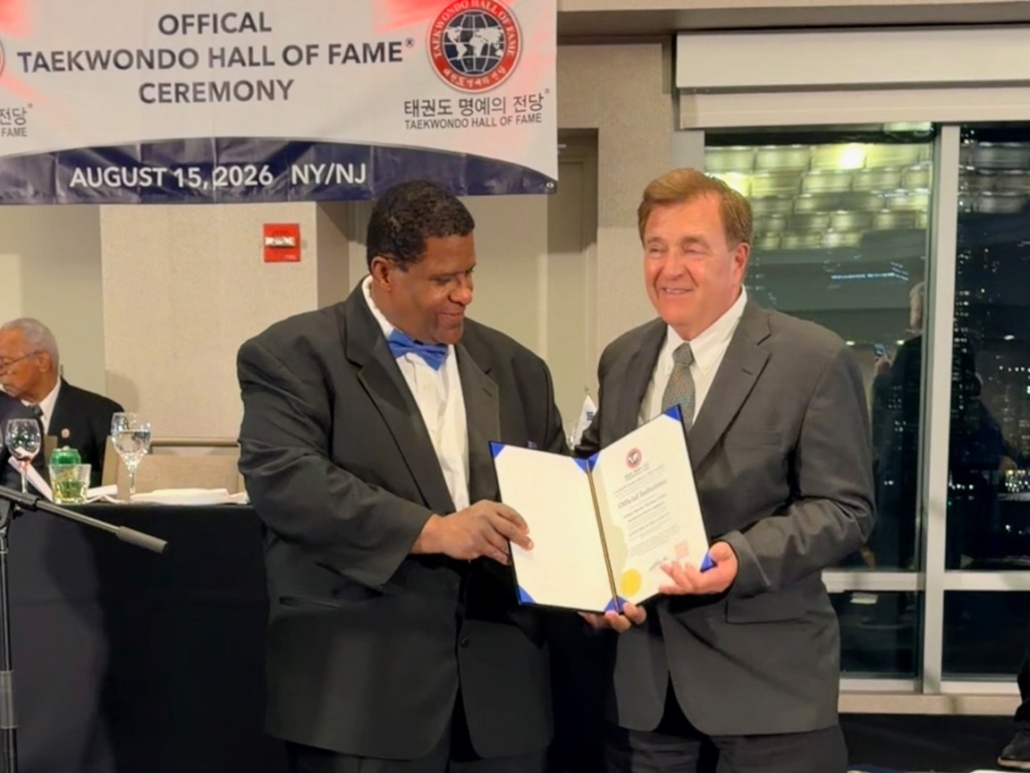
Stephen Oliver receiving his Official Induction certificate at the Official Taekwondo Hall of Fame ceremony, August 15, 2026, NY/NJ

Golden, Colorado — 2026. Grand Master Stephen Oliver, Founder and CEO of Mile High Karate and Martial Arts Wealth Mastery and CEO and Chairman of NAPMA, was promoted to 10th Degree Black Belt in April 2026 and inducted into the Official Taekwondo Hall of Fame on August 15, 2026. The two honors mark more than five decades in the martial arts, beginning with his first class in Tulsa, Oklahoma, in 1969.

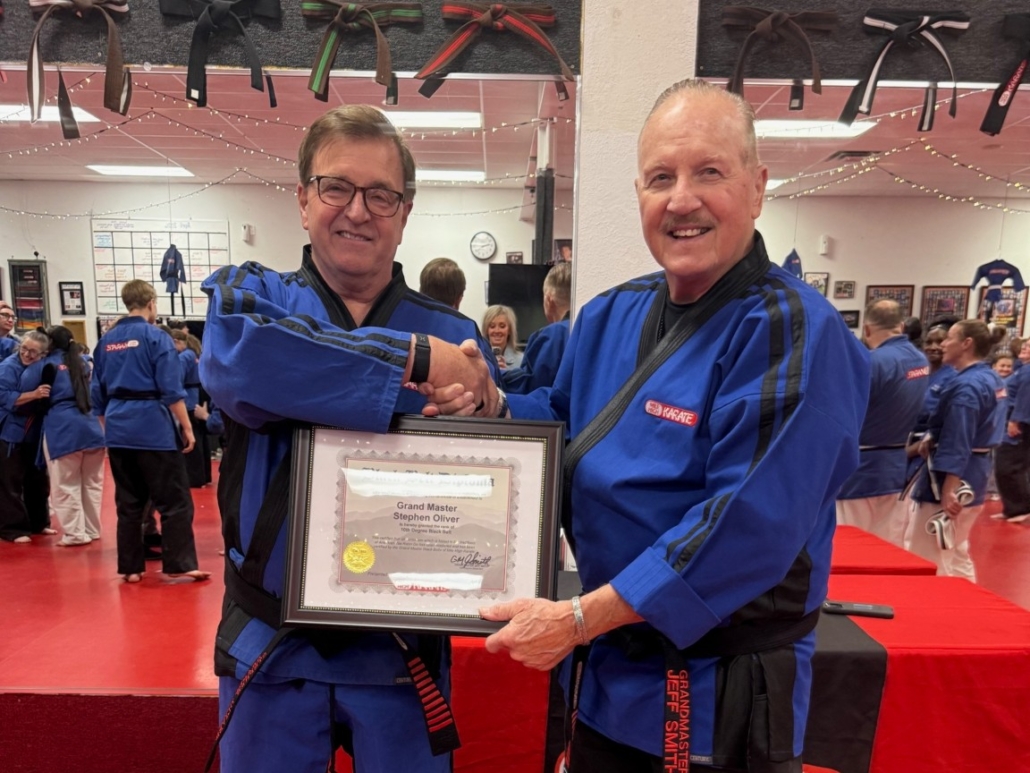
Grand Master Jeff Smith presenting Grand Master Stephen Oliver with his 10th Degree Black Belt diploma at Mile High Karate
Grand Master Jeff Smith presents Grand Master Stephen Oliver with his 10th Degree Black Belt diploma at Mile High Karate, April 2026.

Promoted to 10th Degree Black Belt — April 2026

In April 2026 Grand Master Jeff Smith promoted Stephen Oliver to 10th Degree Black Belt, the highest rank in his art. Jeff Smith, the first PKA World Light-Heavyweight Champion and Chief of Instruction at Mile High Karate and Martial Arts Wealth Mastery, has trained alongside Oliver in the Jhoon Rhee lineage for decades and had previously promoted him to 7th Degree in 2001, to 8th Degree on October 21, 2006, and to 9th Degree on October 1, 2016 (with Grand Masters Bill Wallace, Pat Burleson and Joe Corley).

Separately, Oliver was promoted to Ju-Dan (10th Degree) by the Uechiryu Butokukai, founded in 1974, with the unanimous approval of its Senior Master’s Council under the authority of Grand Master Buzz Durkin. That certificate is dated April 29, 2026.

Inducted into the Official Taekwondo Hall of Fame — August 15, 2026

Stephen Oliver receiving his Official Induction certificate at the Official Taekwondo Hall of Fame ceremony, August 15, 2026, NY/NJ
Stephen Oliver receives his Official Induction into the Official Taekwondo Hall of Fame (Lifetime Achievement), August 15, 2026.

On August 15, 2026, Oliver was inducted into the Official Taekwondo Hall of Fame® with a Lifetime Achievement induction, at the organization’s ceremony at the Hyatt Regency Jersey City. The Official Taekwondo Hall of Fame is the international hall of fame founded by Gerard Robbins in New Jersey, which held its first ceremony on April 6, 2007. It is a separate body from World Taekwondo’s own hall of fame, which was inaugurated in 2021.

Fifty-seven years in the Jhoon Rhee lineage

Oliver began training in 1969 in Tulsa, Oklahoma, under Jhoon Rhee Institute Black Belts Bob Olinghouse and Gran Moulder, in the Jhoon Rhee, Allen Steen and Pat Burleson lineage. He began teaching in 1974, opened his own school in 1975 at age 15, and received his 1st Degree Black Belt from Grand Master Jhoon Rhee in 1978. Jhoon Rhee awarded him his ranks through 6th Degree (Sixth Dan), which he received on May 22, 1994. The full rank history is on the Martial Arts Lineage page.

Why the honors matter to school owners

Oliver is best known in the martial arts industry as a business builder. He founded Mile High Karate in August 1983 with $10,000, reached more than 2,500 active students and over $1,700,000 in annual revenue (approximately $5,200,000 in today’s dollars) by age 25, and passed 3,500 active students by the late 1980s before growing further through international franchise locations. He has coached martial arts school owners since 1985 and has personally promoted more than 1,000 Black Belts, aged 5 to 76.

The 10th Degree and Hall of Fame recognize that the two careers were never separate. His long-held conviction is that great martial arts and great business are inseparable: profitable schools attract better instructors, serve more families, keep higher teaching standards and produce more Black Belts.

About Grand Master Stephen Oliver

Grand Master Stephen Oliver, MBA, is a 10th Degree Black Belt and the Founder and CEO of Mile High Karate and Martial Arts Wealth Mastery, one of the martial arts industry’s leading coaching and consulting organizations for professional martial arts school owners, BJJ academies, and MMA gyms. A martial arts school owner since 1975 and business coach since 1985, Oliver has spent more than five decades building, operating, and advising successful martial arts schools. He also serves as CEO and Chairman of NAPMA (the National Association of Professional Martial Artists) and Publisher of Martial Arts Professional magazine. A Georgetown University cum laude graduate, he earned his Executive MBA through the Executive Program at the Daniels College of Business at the University of Denver. He was promoted to 10th Degree Black Belt in April 2026 and inducted into the Official Taekwondo Hall of Fame in August 2026. Learn more at MartialArtsWealth.com and StephenCOliver.com.

Related: Full biography · Achievements and awards · Martial arts lineage · Speaking and media kit · Grand Master Jeff Smith

Media contact: office (720) 256-0208 · Contact page

Last updated: October 2026

October 4, 2026/by Stephen Oliver
https://i0.wp.com/stephencoliver.com/wp-content/uploads/2026/10/stephen-oliver-official-taekwondo-hall-of-fame-induction-2026.jpg?fit=1152%2C864&ssl=1 864 1152 Stephen Oliver https://stephencoliver.com/wp-content/uploads/2026/07/stephen-oliver-logo.gif Stephen Oliver2026-10-04 15:06:382026-10-17 03:20:12Stephen Oliver Promoted to 10th Degree Black Belt and Inducted into the Official Taekwondo Hall of Fame

Archive

  • October 2026
  • July 2026

Categories

  • Awards
  • Biography
  • Business
  • Impact
  • Join
  • Media
  • Uncategorized

Facebook

Instagram

No images available at the moment

Follow Me!

Stephen Oliver, MBA

10th Degree Black Belt
Founder, Mile High Karate & Martial Arts Wealth Mastery · Golden, Colorado

Call or Text: 1-720-256-0208

Websites

MartialArtsWealth.com

FillYourSchool.com

MileHighKarate.com

MartialArtsProfessional.com

AdvisorWealthMastery.com

Websites

NAPMA.com

ExtraordinaryTeaching.com

ExtraordinaryMarketing.com

MartialArtsBootcamp.com

© Copyright - Stephen Oliver, MBA
  • Link to Facebook
  • Link to Instagram
  • Link to Youtube
  • Link to LinkedIn
  • Link to X
  • Contact
  • Privacy Policy
  • Site Map
  • Criticism and Responses
Scroll to top Scroll to top Scroll to top